Dry Bag or Packing Cube for Spare Clothes?
Dry bag or packing cube for spare clothes? Compare moisture exposure, closure, and access to choose a container that suits your change of clothes.
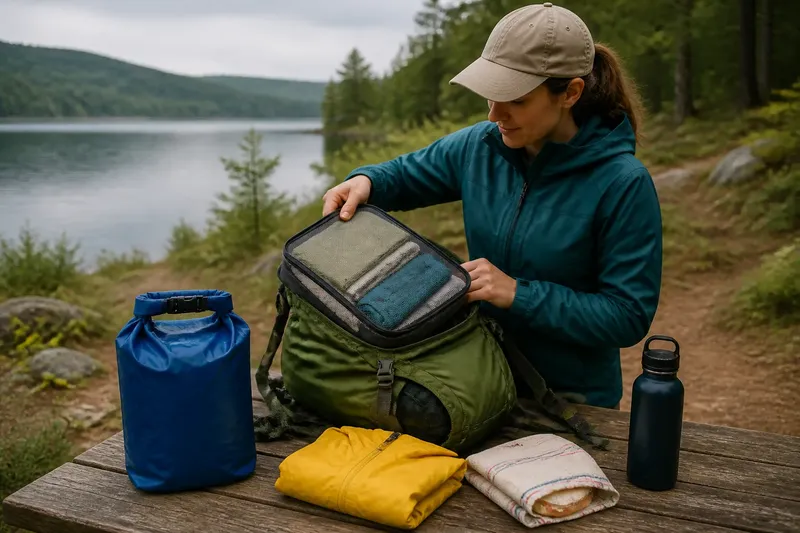
Dry bag or packing cube for spare clothes? If a damp rain shell will share space with your clean layers, a dry bag creates a more deliberate moisture barrier; if your pack keeps them apart, a cube may be easier to open. The choice depends on the exposure your clothes face and how you plan to reach them.
Say you are packing for a relaxed afternoon beside a lake, with a short walk from the parking area and a chance of rain. You have a fleece, a dry shirt, socks, a light rain shell, and lunch wrapped in a cloth. A cube can keep the clothing together, while a roll-top dry bag is intended to shield its contents from outside moisture when closed as directed.
Decide what the clothes need protection from
Start with the likely source of dampness. Rain may reach an exposed pack, a wet shell may rub against clean layers, or a spilled drink may soak items in a shared compartment. A cube helps you sort clothes, but its fabric, seams, and zipper are not waterproof.
A dry bag uses a roll-top closure that folds over itself. It provides a more useful moisture barrier than a fabric cube when it is closed correctly, but its protection depends on the bag’s design and intended use. Check the manufacturer’s instructions rather than assuming that every dry bag suits every kind of exposure.
The distinction is like a drawer divider beside a lidded container: one keeps things arranged, while the other is meant to separate them from what is outside. Neither option substitutes for keeping a wet item from pressing against clean clothes if the bag is open.
Choose a cube when access and separation matter most
A packing cube makes a clothing bundle easy to find and remove. Its zipper is quick to open, and mesh panels can make contents visible. Solid fabric offers more privacy when the pack is open.
Use a cube when your pack compartment stays sheltered and damp items have their own place. For example, the rain shell can ride in an exterior pocket while the cube holds the shirt and socks. That arrangement keeps the clean layers together without adding a roll-top closure to open and close.
A cube is not a moisture barrier. If rain can reach the compartment or a wet item may touch the clothes, use a suitable waterproof container for the layers that need to stay dry. A cube’s fabric can also trap dampness or grit after an outing, so empty it and let it air out before storing clean clothes inside.
Choose a dry bag when dampness could reach the clothes
Put clean clothes in a dry bag when rain or nearby wet gear could reach them. Keep the opening clear, leave enough room to fold the top as directed, and avoid packing it so tightly that the closure cannot be used properly.
Opening a dry bag takes more handling than opening a cube. You must release the fold, retrieve the clothes, and roll the top closed again if the bag will return to a damp area. Placing it where you can reach it without unloading the pack can make that task simpler.
Material and shape vary. A soft bag can settle around clothing, while a firmer one may hold its form. Consider whether the opening is wide enough for the clothes you intend to carry, and follow the care guidance for the particular bag.
Use a short decision check before packing
- Check whether rain can reach the compartment; if it can, put the clothes in a suitable dry bag, or use a cube if the compartment is sheltered.
- Check whether a wet shell will share the clothing compartment; if it will, separate the clean clothes in a dry bag, or use a cube if the shell has its own pocket.
- Check whether you need to open the clothing container often; if you do and moisture exposure is low, choose a cube, or place a dry bag near the top if protection matters more.
- Check whether the dry bag’s roll-top can close as directed with the clothes inside; if it can, use it for the moisture barrier, or choose a cube and keep the clothes in a sheltered compartment if it cannot.
- Check whether the cube fits the clothes without forcing its zipper; if it does, use it for organization, or select a more suitable container if it does not.
- Check whether the container is damp or gritty before adding clean clothes; if it is, empty and air it first, or use a clean, dry container instead.
Work through the choice for a lakeside outing
Imagine a walker starts with a daypack, a dry shirt and socks, a rain shell, and lunch wrapped in cloth. The pack has a sheltered main compartment and a separate exterior pocket, and the walker expects to reach the spare clothes once. These are invented details for the example, not claims about a particular pack or outing.
First, the walker puts the shell in the exterior pocket, so it will not sit against the clothes. Next, they check that rain is unlikely to reach the sheltered main compartment. Since keeping the bundle easy to find matters more than adding a moisture barrier in this situation, they put the shirt and socks in a packing cube and place it where it can be reached without unpacking lunch.
The result is a clothing bundle that is easy to locate, with the shell kept apart. If the starting conditions changed and the shell had to share the main compartment, the walker would instead put the clean clothes in a properly closed dry bag. That choice adds handling at the moment of access in exchange for a clearer barrier from the damp shell.
Common questions about dry bags and packing cubes
Can a packing cube keep spare clothes dry?
No. A cube groups clothes, but its fabric and zipper do not make a waterproof seal. Use a suitable dry bag if rain or wet gear could reach the clothes.
Is a dry bag awkward to open for a clothing change?
It takes more handling than a cube because the roll-top must be opened and closed again. Keep it accessible in the pack, or choose a cube when moisture exposure is low.
Can a cube go inside a dry bag?
Yes. The cube can keep clothes arranged while the dry bag provides an outer moisture barrier when properly closed. The extra layer may take more room and slow access.
What should stay outside the dry bag?
Keep items that are wet, gritty, or needed without opening the clothes bundle elsewhere in the pack. A rain shell in a separate pocket is one option when the pack has that space.
Keep the container clean and ready for the next outing
After using a cube, empty it and check its seams and corners for grit or dampness. Let it dry before storing clean clothes inside. For a dry bag, empty it, air it out, and follow its care instructions, especially if they specify how to handle its coating or closure.
For spare clothes, the choice between a dry bag and a packing cube comes down to exposure and access. Choose the cube when your pack keeps clothes sheltered and separate; choose a dry bag when moisture could reach them. If both organization and a stronger barrier matter, a cube inside a correctly closed dry bag can serve both purposes, provided the added layer still lets you reach the clothes when needed.